



1. What Is Otitis Externa?
Otitis externa is inflammation of the external ear canal and often the pinna. The feline canal is an L-shaped vertical-then-horizontal bend that traps moisture and debris—an ideal niche for inflammation. Common causes: ear mites (Otodectes cynotis, the majority of feline cases), bacterial or Malassezia overgrowth, allergies (food or environmental), foreign material, and conformational issues. Recurrence can extend to the middle ear (otitis media).
2. When to See a Vet
Typical signs: frequent head-shaking, ear scratching, a foul odor, increased brown or black debris, material flung on shaking, red swollen pinna, pain on touch, head tilt (middle-ear involvement), and stenosis. Mite infection is usually bilateral and intensely itchy; bacterial or fungal is often unilateral with malodorous discharge. Kittens and outdoor cats are most mite-prone.
3. Diagnosis and Examination
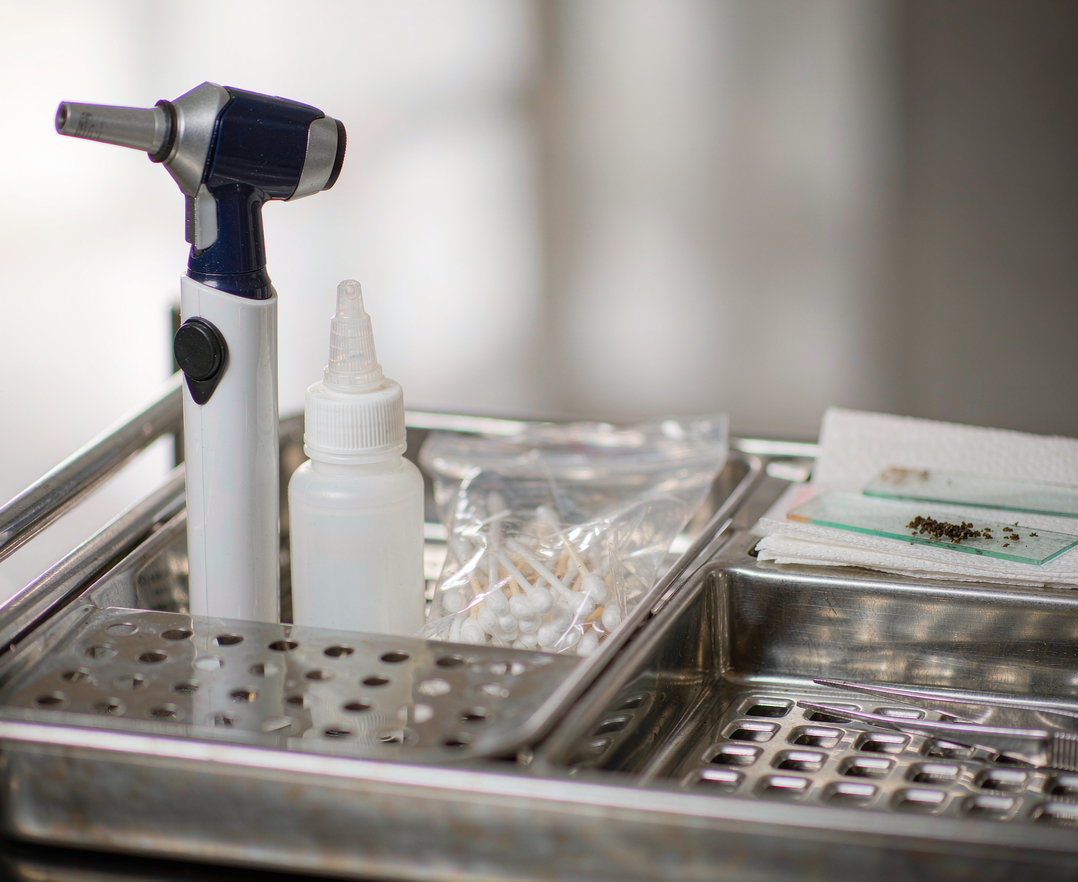
Otoscopy visualizes the canal and tympanum, judging redness, discharge, foreign bodies, or polyps; otic cytology under the microscope distinguishes mites, Malassezia (banana-shaped yeasts), and bacteria; culture and sensitivity is added when needed. CT or endoscopy is used for suspected media or polyps. Confirm an intact tympanum before flushing to avoid pushing infection inward.
4. Treatment
Ear mites: topical parasiticides (selamectin, moxidectin) applied systemically, typically 2–4 weeks, with environmental control. Bacterial or fungal: medicated drops (antibiotic plus antifungal plus glucocorticoid) after daily cleaning, with in-clinic deep flushing for severe cases. Allergy-driven disease needs the underlying cause managed. Refractory or middle-ear cases need oral drugs or ear surgery (lateral wall resection, total ablation). Never probe deep with cotton swabs—risk tympanic damage.
5. Home Care
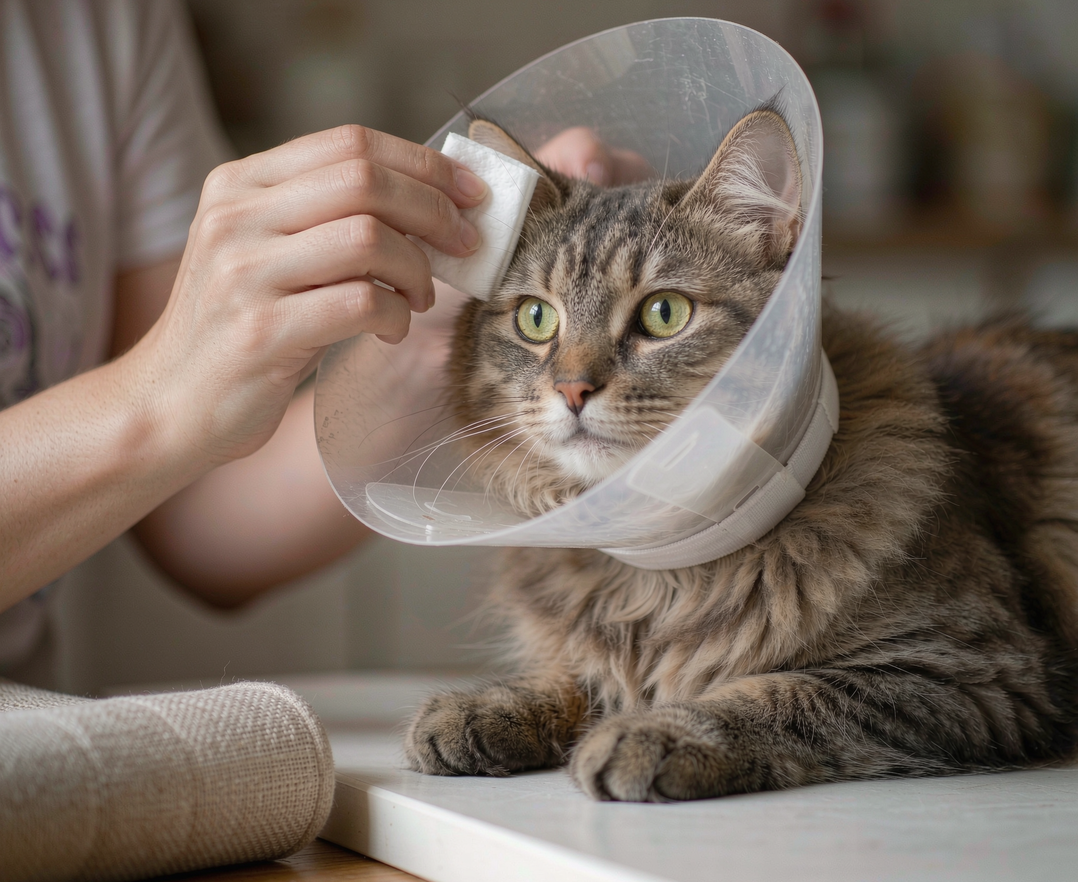
Clean per plan: pet ear cleanser, massage the base, let the cat shake, wipe the pinna; an E-collar prevents self-trauma. Finish the full course and recheck cytology even after signs resolve. Keep the home dry and clean and deworm regularly to prevent mites. An aural hematoma (vessel rupture from shaking) needs veterinary drainage or surgery—not home care.
6. Risks, Myths and Prognosis
Risks: otitis media, aural hematoma, stenosis or calcification, hearing loss, chronic pain. Myths: ‘swabs clean best’ (they injure), ‘human drops are fine’ (wrong agents), ‘odor is normal’ (it signals inflammation). Prognosis: most external otitis clears in 2–4 weeks; media or polyps take longer; disciplined prevention sharply cuts recurrence.
Source: Miller WH, Griffin CE, Campbell KL, Muller & Kirk’s Small Animal Dermatology, 7th ed., Elsevier, 2013.