


Introduction
A cat's heart can betray it silently. Feline cardiomyopathy—stealthy muscle disease—hides until it suddenly surfaces.
The StoryVeterinarians stage feline heart disease from A to D using the ACVIM system. Hypertrophic cardiomyopathy (HCM), the most common form, thickens left-ventricular walls to ≥6 mm, with a 5–5.9 mm 'grey zone' (Ettinger & Feldman, 2024); dilated (DCM) and restrictive (RCM) forms differ. Left-ventricular thickness under 3.6 mm signals dilated or burn-out disease.Echocardiography confirms disease; NT-proBNP distinguishes cardiac from non-cardiac dyspnea (Ward et al., 2018) and detects HCM above 150 pmol/L (Wess et al., 2017). Murmurs surface in up to 80% of subclinical cases, and symptomatic cats may show heart rates exceeding 200 bpm. In these patients, thoracic radiography confirms pulmonary edema. Kasetsart University clinicians urge early screening—because catching HCM sooner protects feline hearts longer.
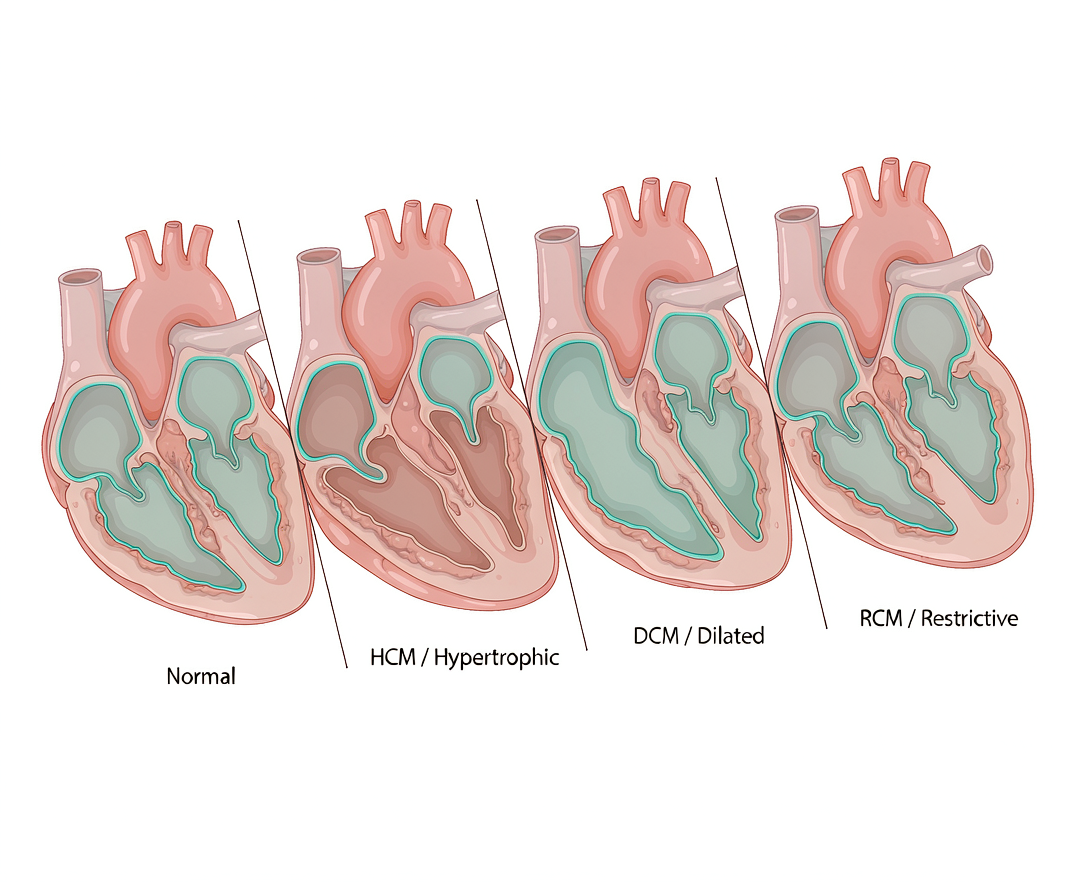
Figure 1. Four cardiac phenotypes in the cat — Normal, hypertrophic (HCM), dilated (DCM), and restrictive (RCM).
Terminology Sources·
ACVIM staging & diagnostic protocols — Kasetsart University, Faculty of Veterinary Medicine (seminar).·
NT-proBNP cardiac vs. non-cardiac dyspnea — Ward et al., 2018.·
NT-proBNP HCM cut-off (150 pmol/L) — Wess et al., 2017.·
Cardiomyopathy phenotypes & HCM wall-thickness reference — Ettinger & Feldman, Textbook of Veterinary Internal Medicine, Elsevier, 2024.