


1. What Is Feline Fracture Repair?
A fracture is a break in the continuity of a bone. Feline fracture repair restores and stabilizes the broken ends using internal fixation (plates, screws, pins or intramedullary pins) or an external skeletal fixator (ESF), creating the stability that bone healing requires. Cats have slender bones with thin cortices; they heal quickly but are prone to re-fracture, so every plan must be individualized.
2. When Is Surgery Needed?
Not every fracture needs surgery. Closed, undisplaced, stable fractures may be managed conservatively with external coaptation and cage rest. Femoral, tibial, pelvic and intra-articular fractures—or open, comminuted or displaced fractures—usually require surgery. Common causes include high-rise syndrome, road traffic accidents and crush injuries. Warning signs are sudden lameness, limb deformity, refusal to bear weight, and local swelling and pain. Early assessment and treatment directly affect whether limb function can be preserved.
3. Preoperative Assessment and Preparation
At least two orthogonal radiographic views are needed, with CT added for complex cases to assess fracture configuration and joint involvement. Bloodwork and biochemistry evaluate anesthetic tolerance and general health. Fast food for 6–8 hours and water for 2–4 hours. Open fractures require early antibiotics and thorough wound debridement to reduce infection risk.
4. Surgery and Anesthesia
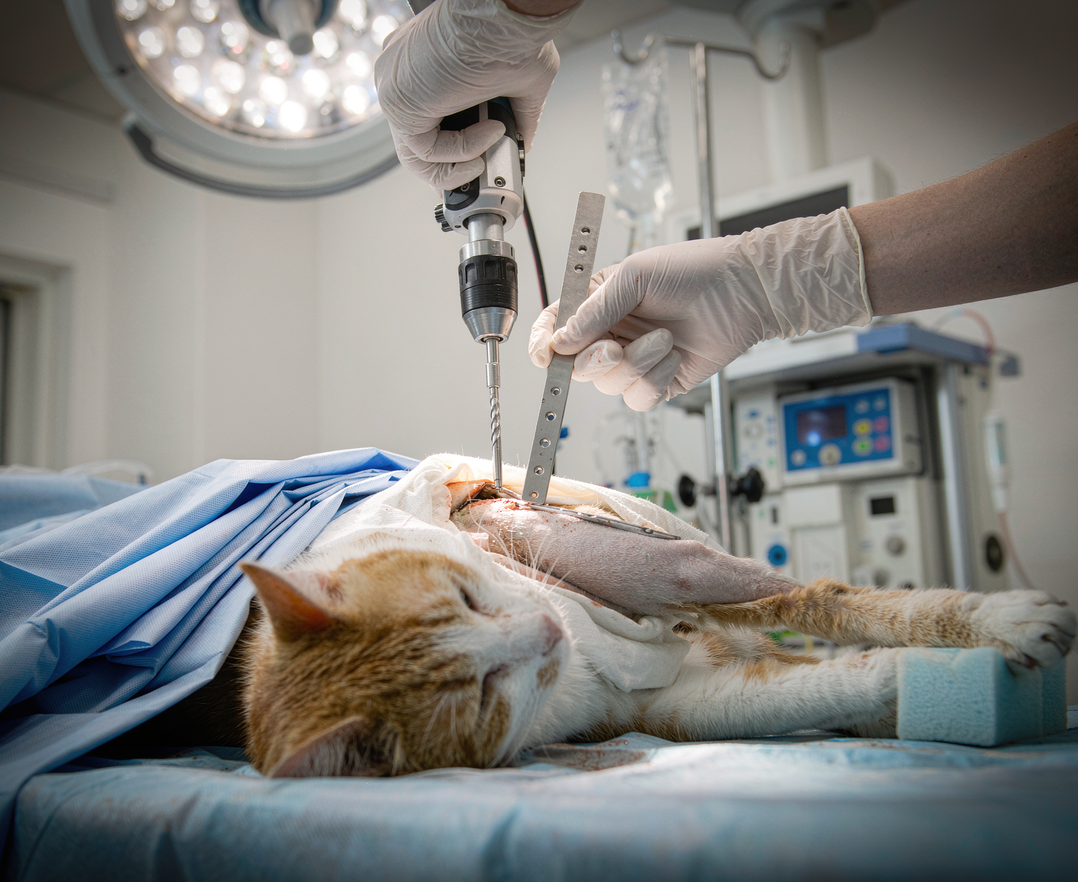
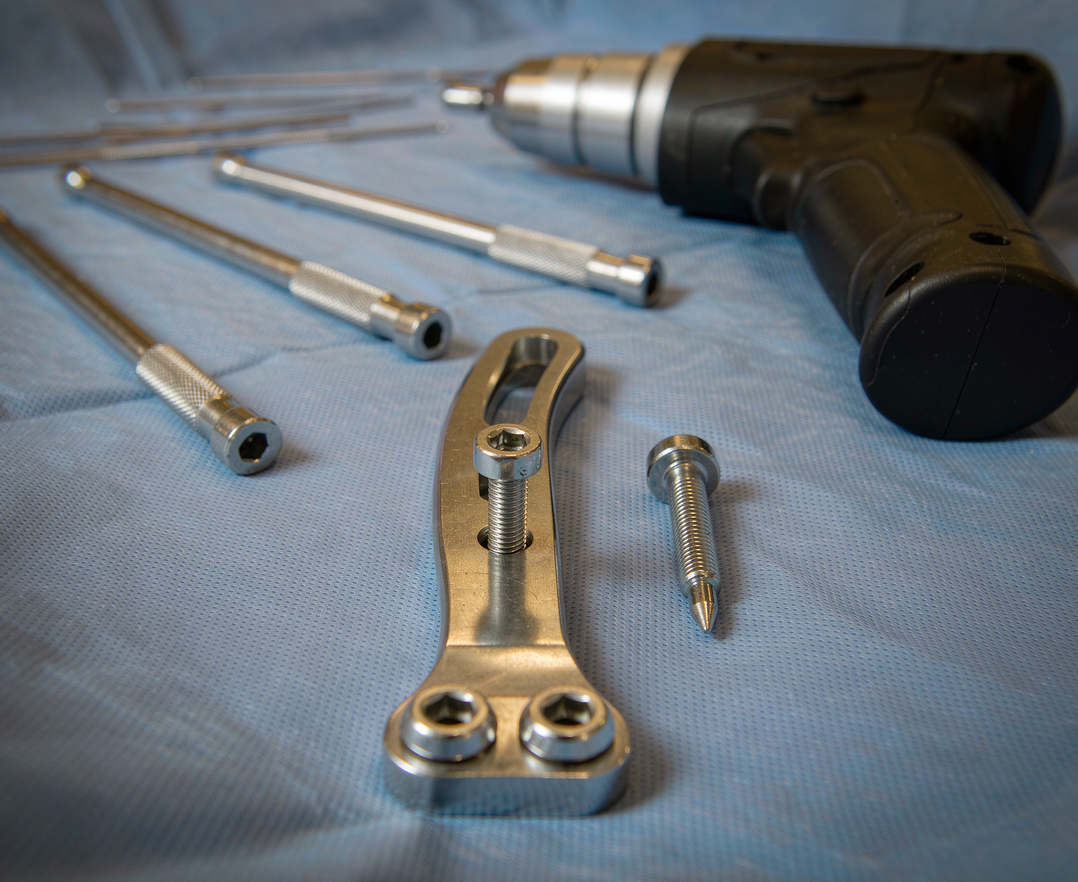
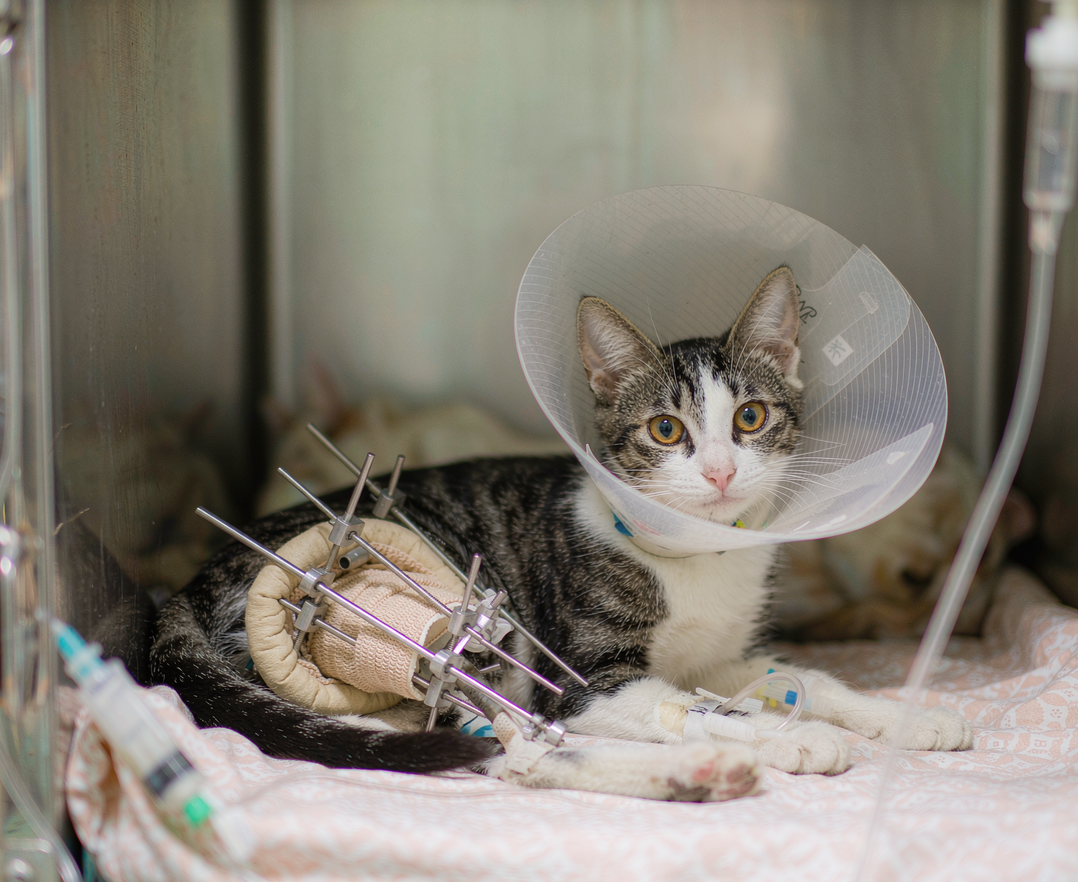
Surgery is performed under general anesthesia with intraoperative monitoring (heart rate, blood pressure, SpO2, end-tidal CO2, temperature). The technique depends on the site: intramedullary pins, cerclage wires or locking plates for long bones; screws or K-wires for articular fractures; an ESF for comminuted fractures. Strict asepsis, anatomical reduction and rigid fixation are essential to success.
5. Postoperative Care
Strict cage rest for 4–8 weeks with no jumping or vigorous activity. An Elizabethan collar prevents licking. Scheduled radiographs track callus formation and healing. Provide pain management (NSAIDs, opioids) and wound checks, plus nutritional support and weight control to ease the load on the limb. Recovery usually takes weeks to months and requires patience.
6. Risks, Myths and Prognosis
Risks include infection, implant failure or loosening, nonunion, joint stiffness, and physeal injury in kittens. Common myths—that fractures heal on their own, that earlier weight-bearing is better, or that calcium supplements speed healing—are all inaccurate. Prognosis depends on fracture type, soft-tissue damage and owner compliance; with proper care most cats regain good function.
Source: Fossum TW, Small Animal Surgery, 5th ed., Elsevier, 2019.