



1. What Are Feline Eye Diseases?
Feline eye disease affects the globe and its adnexa. A cataract is lens protein opacification that blocks light from reaching the retina. A corneal ulcer is a defect from the epithelium into the stroma, usually from trauma, keratoconjunctivitis sicca (KCS), lid abnormalities, or infection. Cats have large, exposed corneas and hide discomfort, so disease is often advanced at presentation.
2. When to See a Vet
Warning signs: a white or cloudy eye, squinting or photophobia, persistent tearing or yellow-green discharge, red conjunctiva, pawing at the eye, a protruding third eyelid, and vision loss (bumping into objects, reluctance to jump). Congenital or hereditary cataracts appear in kittens; senile cataracts and KCS-related ulcers dominate in seniors. Any sign warrants prompt care—a corneal ulcer can perforate within days.
3. Diagnosis and Examination
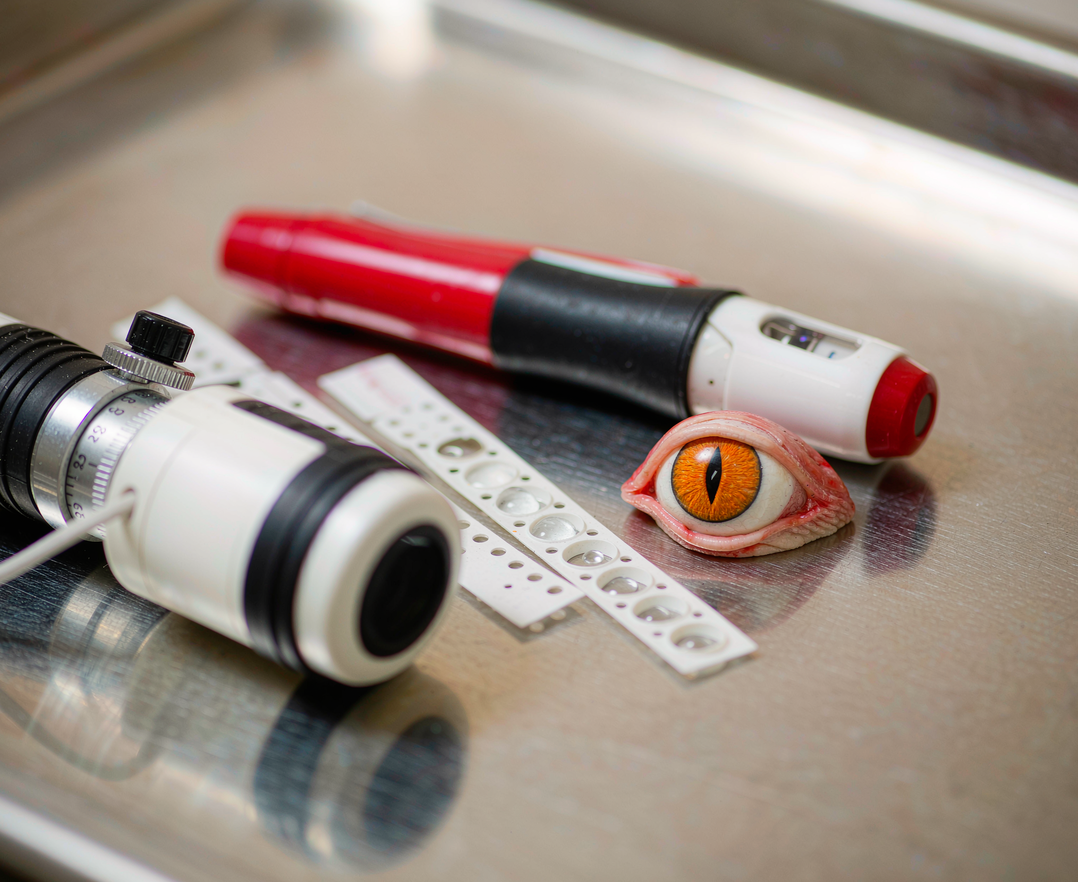
Ophthalmologic work-up: slit-lamp biomicroscopy of the lens and corneal layers, fluorescein staining to reveal epithelial defects, a Schirmer tear test for tear volume, tonometry to rule out glaucoma, and fundoscopy. Conjunctival culture, nasolacrimal flushing, or ocular ultrasound are added as needed. Cataract (lens) and corneal ulcer (cornea) must be distinguished because treatment differs entirely.
4. Treatment
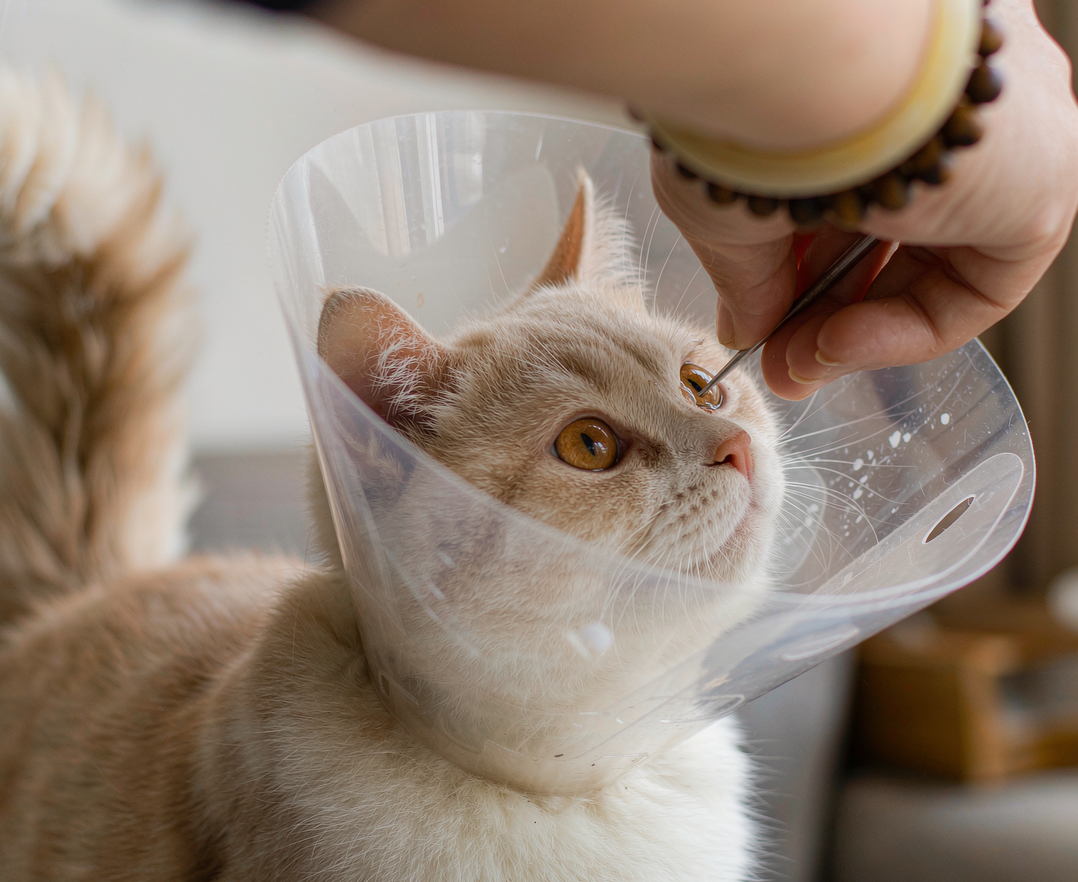
Corneal ulcers: superficial ones need broad-spectrum antibiotic ointment or drops, artificial tears, and an E-collar; deep or perforating ulcers need debridement, a conjunctival or third-eyelid flap, or a biosynthetic corneal graft. Cataracts: medication only slows progression; definitive treatment is phacoemulsification with intraocular lens implantation by a specialist. Never use human eye drops—some contain steroids that worsen ulcers or glaucoma.
5. Home Care
Strict E-collar prevents self-trauma; apply drops on schedule without touching the cornea; keep humidity up and dust low; stop the cat from rubbing its face; recheck fluorescein and intraocular pressure regularly. Never stop or double the dose on your own. Antioxidants (lutein, vitamin E) may support lens health but do not replace treatment.
6. Risks, Myths and Prognosis
Risks: ulcer perforation, secondary glaucoma, uveitis, and harder surgery once a cataract matures. Myths: ‘tearing is normal’ (usually disease), ‘human drops are fine’ (steroids can blind), ‘drops dissolve cataracts’ (none reverse them). Prognosis: superficial ulcers heal in 1–2 weeks; most cataracts regain vision after surgery; delay causes permanent blindness. With proper care, vision is preserved in the large majority.
Source: Gelatt KN, Gilger BC, Kern TJ, Veterinary Ophthalmology, 6th ed., Wiley-Blackwell, 2021.