

Part 1: The Charm and Cost of the Short-Legged Phenomenon
The Welsh Corgi, with its iconic short legs, long body, and cheerful “wiggle,” has captured hearts worldwide, its adorable image a source of endless joy. However, this highly distinctive “sausage-like” physique is not a product of natural evolution but of human selective breeding, and it comes at a heavy health cost for the breed. The unnaturally long spine paired with very short limbs creates a biomechanical imbalance, making the entire backbone resemble a fragile carrying pole under immense stress, setting the stage for the “hidden crisis” of intervertebral disc disease (IVDD).
Part 2: The Core Disease: Understanding Intervertebral Disc Disease (IVDD)
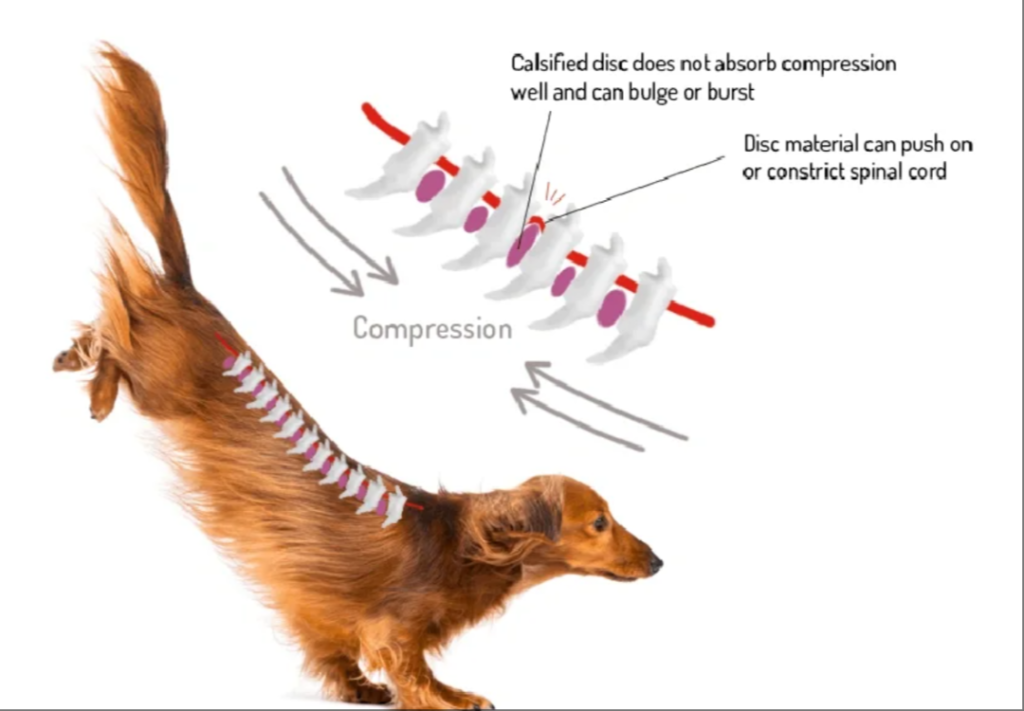
Definition and Case: Intervertebral Disc Disease (IVDD) is a condition where the discs (cartilage cushions) between the vertebrae degenerate, bulge, or rupture, compressing the spinal cord nerves. It is a painful and potentially paralyzing disease common in high-risk breeds like Corgis, influenced by the chondrodysplasia (CDDY) gene. In 2024, a 7-year-old Corgi was rushed to the hospital due to sudden paralysis of its hind legs. X-rays revealed a severely herniated disc compressing the spinal cord. The owner recalled with remorse, “It had been lying on the ground a lot lately, reluctant to move. I just thought it was getting lazy with age.” This was, in fact, an early warning sign of IVDD. Symptoms and Data: The symptoms of IVDD depend on the location and severity of the herniation and progress in stages: Early stage: Lower back pain, sensitivity, a hunched back, reluctance to be picked up or touched on the back. Mid-stage: Wobbly walking, hind leg weakness, unwillingness to jump or climb stairs. Late/Acute stage: Can lead to complete hind leg paralysis, inability to walk, crying in pain, and even loss of bladder/bowel control. Corgis are an exceptionally high-risk breed for IVDD, with a risk more than 10 times higher than that of many non-chondrodysplastic breeds. Root Causes: IVDD results from a combination of genetic structure and environmental factors. The primary (genetic) cause is the unnaturally selective body proportion—an excessively long spine paired with very short legs. This structure subjects the spinal joints to abnormal shear force and pressure, making the discs prone to premature degeneration and herniation. Key aggravating (environmental) factors include obesity (significantly increasing spinal load), vigorous jumping, and frequent stair climbing. These acts as the “final straw” that can trigger an acute disc herniation.
Part 3: Diagnosis, Prevention, and Lifelong Management
Diagnosis: When IVDD is suspected, a veterinarian will conduct a detailed neurological examination (assessing reflexes, pain perception, etc.) to locate the nerve damage. The gold standard for confirmation is Magnetic Resonance Imaging (MRI), which clearly shows the condition of the spinal cord, nerve roots, and discs, and is crucial for deciding the treatment plan (medical or surgical). X-rays can assess disc space changes and rule out other bone diseases but cannot directly visualize nerve compression. Prevention and Breeding Selection: Preventing IVDD requires proactive, lifelong management for a Corgi. The foremost rule is weight control; avoid any excess body fat that adds stress to the spine. Lifestyle management is critical: It is essential to strictly prohibit Corgis from climbing stairs independently and from jumping off heights (like sofas and beds). Use pet ramps or steps at home. Encourage gentle exercise (like walks on level ground), but avoid excited, vigorous running and jumping. Under veterinary guidance, supplementing with joint nutrients like chondroitin and glucosamine may help support disc health. In breeding selection, priority should be given to breeding dogs with relatively straight toplines and sturdy builds, utilizing genetic testing to screen for associated risks. Daily Care and Emergency Response: Owners should learn to recognize the early symptoms mentioned above. If signs of pain appear, restrict the dog’s activity immediately and seek veterinary care promptly. In the case of acute paralysis, when transporting the dog, always keep its back level and straight (using a rigid board if possible), avoid any bending or twisting, and seek emergency veterinary care.
Part 4: Reflection and a Call to Action
The “hidden crisis” of the Corgi is a classic case of an imbalance between aesthetics and health. While we are captivated by the extreme, contrasting cuteness of their “short legs and long back,” we must confront the lifelong biological challenges this conformation imposes on them. Loving a Corgi means becoming the lifelong guardian of its spine. This requires us to proactively manage its weight, adapt its living environment, and understand its exercise restrictions. Furthermore, supporting breeders who prioritize healthy structure over extreme morphology is the long-term solution to alleviating the burden on this adorable breed at its source. Their joyful running should not come at the potential cost of paralysis. Our responsibility is to use scientific knowledge and careful care to provide an umbrella of protection for that vulnerable backbone.